
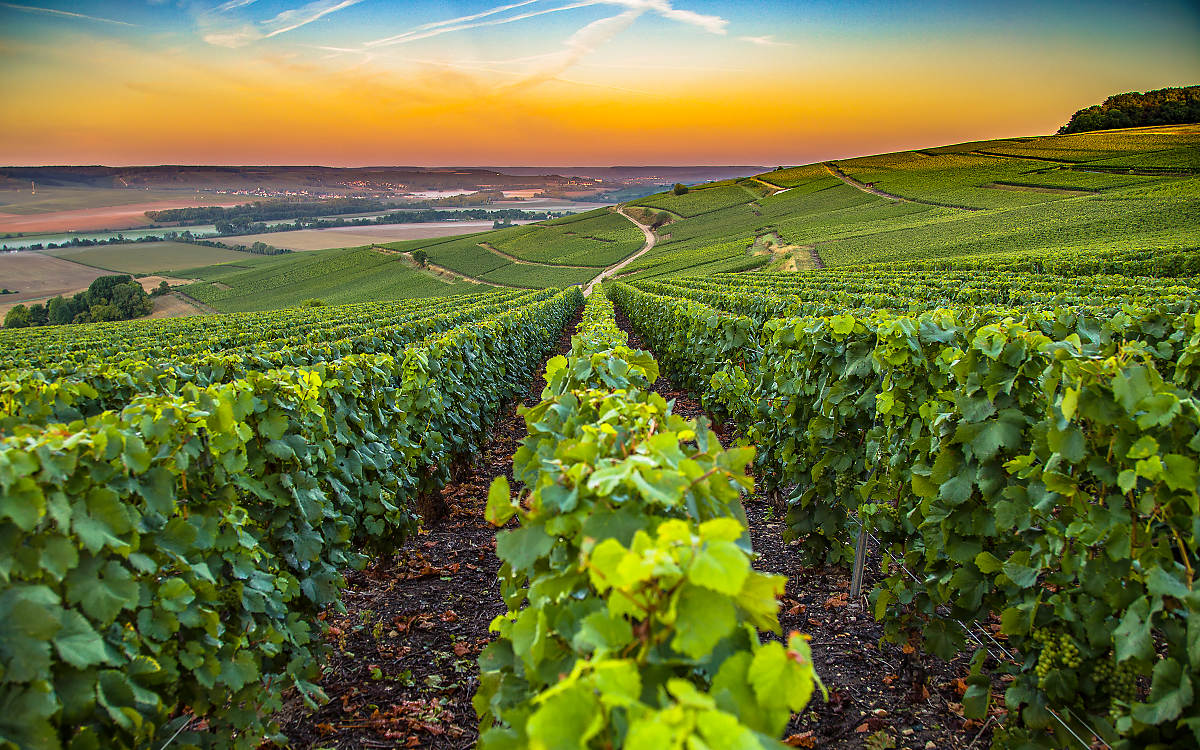
Champagne Wine Region
Champagne Wine Region
When most people think of Champagne they envision celebrations, clinking flutes and the world’s most renowned sparkling wine.
But the Champagne region in northeastern France is far more than just its effervescent export: it is a land steeped in history, a treasure trove of cultural heritage and a destination brimming with gourmet indulgences. From its rolling vineyards to its medieval cathedrals and lively festivals, Champagne offers an unforgettable experience for travelers seeking a blend of wine, culture and gastronomic delights.
Welcome to Champagne Wine Region
Nestled between the regions of Île-de-France (to the west) and Lorraine (to the east), Champagne boasts an evocative landscape punctuated by vineyards, ancient villages and stately châteaux. At first glance, the area’s gentle hillsides and winding valleys may seem serene but beneath the surface lies a rich tapestry of stories—from coronations in Reims Cathedral to centuries-old traditions of winemaking.
This article will guide you through the Champagne region’s heritage, its world-famous wines, must-visit destinations and the culinary marvels that complement the local bubbly. Whether you are planning a short getaway or a more immersive journey, these insider tips will help you make the most of your time in Champagne.
About the Region
Champagne is located in northeastern France, approximately 90 miles (145 km) east of Paris. Historically, the region’s capital Reims, served as the coronation site for French kings for centuries. Its strategic location made it a crossroads of European trade routes, enabling the wine trade to flourish.
The region itself is composed of several sub-areas, the most famous of which is the Marne Valley renowned for its prestigious vineyards and grand Champagne houses. Other notable areas include the Côte des Blancs and the Montagne de Reims, each contributing distinct terroir influences that give Champagne its signature finesse.
Terroir and Climate
Champagne’s terroir is characterized by its chalky, limestone-rich soils. These unique subsoils offer excellent drainage, forcing grapevines to root deeply and extract vital minerals. This chalk base also helps regulate temperatures, providing an ideal growing environment.
The region’s cool, semi-continental climate presents a relatively short growing season, resulting in high acidity levels in the grapes—essential for producing crisp, refreshing sparkling wines. The combination of terroir and climate is part of the magic that produces Champagne’s signature effervescence and complexity.
Culture and Traditions
Champagne is steeped in centuries of winemaking tradition, most famously credited to the Benedictine monk Dom Pérignon, who significantly advanced the region’s sparkling wine methods in the 17th century. Local culture revolves around hospitality, gastronomy and an unbreakable bond with the vine. Here, you will find that each village has its own festivals, celebrating the harvest, historical anniversaries or religious feasts with equal fervor.
Wine Specialties and Notable Grape Varieties
Signature Wines
The term “Champagne” is strictly reserved for sparkling wines produced within this region using the traditional method (Méthode Champenoise). This painstaking process includes a secondary fermentation in the bottle and extended aging on the lees, resulting in the delicate, persistent bubbles that define Champagne.
Grape Varieties
Three primary grape varieties dominate Champagne’s vineyards:
- Chardonnay – Brings elegance, citrus notes and finesse.
- Pinot Noir – Adds structure, body and red fruit flavors.
- Pinot Meunier – Known for its fruity character and soft roundness.
Small quantities of other permitted grapes (Pinot Blanc, Pinot Gris, Arbane and Petit Meslier) also add nuance, though they are far less common.
Tasting Profiles
- Blanc de Blancs (made exclusively from Chardonnay) typically displays a lively bouquet of citrus, white flowers and minerality.
- Blanc de Noirs (made exclusively from black grapes, usually Pinot Noir or Pinot Meunier) offers more robust notes of red berries and toast.
- Rosé Champagne can be made by blending red and white wines or through maceration, imparting flavors of wild strawberries and raspberries.
- Vintage Champagne uses grapes from a single harvest year, reflecting the specific terroir conditions of that season.
Must-Try Bottles and Wineries
- Moët & Chandon (Épernay) – One of the largest and most recognizable Champagne houses, renowned for its iconic “Impérial” label.
- Veuve Clicquot (Reims) – Famed for its storied history, innovative techniques and the distinctive yellow label.
- Taittinger (Reims) – Celebrated for its refined, Chardonnay-forward style.
- Ruinart (Reims) – The oldest established Champagne house, with cellars designated as UNESCO World Heritage Sites.
- Bollinger (Ay) – Known for full-bodied, Pinot Noir-dominant blends.
Cuisine
Regional Dishes
Champagne’s cuisine shares affinities with neighboring regions, but it has its own specialties:
- Jambon de Reims – A pressed ham, cooked and often coated in breadcrumbs, offering a tender, flavorful bite.
- Andouillette de Troyes – A coarse-grained sausage made from pork, famously strong in flavor.
- Chaource Cheese – A soft-ripened cheese with a creamy interior and a mild tang.
- Biscuits Roses de Reims – Pink biscuits traditionally dipped into Champagne, absorbing the bubbly while keeping their distinct crunch.
Wine & Food Pairings
- Seafood & Shellfish – A crisp Blanc de Blancs pairs seamlessly with oysters, scallops and lobster.
- Poulet de Bresse or Game Birds – Often complemented by rosé Champagne, balancing the richer flavors.
- Creamy Cheeses (Chaource, Brie) – An excellent pairing for Brut Champagnes, offering acidity that cuts through the richness.
- Strawberries & Light Desserts – A demi-sec or rosé Champagne heightens fruity, sweet notes.
Culinary Hotspots
- Le Jardin Les Crayères (Reims) – Set in a lush park, part of the Michelin-starred Domaine Les Crayères, known for refined French cuisine.
- Le Foch (Reims) – A Michelin-starred establishment offering creative interpretations of regional favorites.
- La Grillade Gourmande (Épernay) – Celebrated for its warm ambiance and traditional French dishes.
Local Products
Beyond the famous sparkling wines, Champagne also boasts local mustard (Moutarde de Reims), vinegar and artisanal chocolates. Shopping in local markets—especially around Reims, Épernay or Troyes—provides a chance to explore these regional treats and chat with the producers who uphold generational culinary practices.
Must-See Vineyards and Attractions
Top Vineyards or Wine Estates
- Avenue de Champagne (Épernay) – Often called the “Champs-Élysées of Champagne.” Stroll along this grand avenue lined with prestigious Champagne houses.
- Montagne de Reims – Picturesque hills dotted with grand cru villages like Verzenay and Bouzy, offering panoramic vineyard views and exquisite tasting opportunities.
- Côte des Blancs – Particularly revered for its Chardonnay vines. Villages like Le Mesnil-sur-Oger and Cramant produce some of the finest Blanc de Blancs.
Cultural and Historical Sites
- Reims Cathedral (Notre-Dame de Reims) – A UNESCO World Heritage Site, famous for its Gothic architecture and as the coronation site of French kings.
- Palace of Tau (Reims) – Formerly a residence for archbishops, it now houses treasures from the cathedral, including tapestries and relics.
- Hôtel Le Vergeur Museum (Reims) – A glimpse into medieval and Renaissance art collections, set within a 13th-century building.
Scenic Routes and Natural Landscapes
- Route Touristique du Champagne – A network of driving trails connecting charming villages and vineyards, perfect for leisurely explorations.
- Regional Natural Park of the Montagne de Reims – Home to forests, hidden trails and wildlife, ideal for nature walks or cycling tours.
Top Destinations
- Reims – Beyond its cathedral, Reims boasts numerous Champagne houses with subterranean chalk cellars that can be toured. The city’s lively center is filled with cafes, brasseries and boutique shops.
- Épernay – Known as the “Capital of Champagne,” its Avenue de Champagne is lined with opulent mansions and cellars that house millions of bottles.
- Troyes – Distinguished by its half-timbered houses, Troyes has a medieval charm and a cluster of churches featuring sublime stained-glass windows.
- Châlons-en-Champagne – Sometimes referred to as “Little Venice” of the region, thanks to its canals and rivers. Don’t miss the Collegiate Church of Notre-Dame-en-Vaux, another UNESCO site.
- Hautvillers – Often considered the cradle of Champagne, thanks to Dom Pérignon. The abbey church here is a significant historic landmark.
Activities
- Cellar Tours & Tastings – Most large Champagne houses offer guided tours of their deep, centuries-old cellars. Some also provide interactive workshops on sabrage (the art of opening a Champagne bottle with a sword).
- Picnics in the Vineyards – Many independent growers offer picnic packages, complete with local cheese, charcuterie and a chilled bottle of their own Champagne.
- Bike Rides & Hiking – Gently rolling hills and well-marked paths make the region ideal for active travelers. Kids can enjoy shorter routes, spotting wildlife in the Montagne de Reims.
- Hot Air Balloon Rides – Soar above the vineyards at sunrise or sunset for a breathtaking view of the Champagne landscape.
- Family-Friendly Museums – The Palais du Tau in Reims has interactive exhibits; for younger children the playful experience can be a fun lesson in history.
Events
- Les Sacres du Folklore (Reims) – A folk festival celebrating different cultures, including dance performances, concerts and parades.
- Johanniques (Reims) – Commemorating Joan of Arc’s arrival in the city, this event features medieval reenactments, concerts and parades.
- Habits de Lumière (Épernay) – Held in December, Épernay’s Avenue de Champagne transforms into an illuminated wonderland with light shows, street performances and fireworks.
- Vendanges (Harvest Season) – Late August to October is the busiest time in the vineyards. Some wineries open their doors to visitors who wish to experience (or simply witness) grape picking.
Best Time to Visit
Champagne experiences cool winters and mild summers with rainfall spread throughout the year. The best time to visit generally depends on your interests:
- Spring (April to June) – Mild weather, fewer tourists, vibrant vineyards sprouting new growth.
- Summer (July & August) – Warmer temperatures, but can be crowded. Expect more festivals.
- Autumn (September & October) – A prime time for harvest. The vineyards turn golden, offering fantastic photo opportunities.
- Winter (November to March) – Quieter, with holiday festivities in towns like Reims and Épernay but be prepared for chilly, sometimes snowy conditions.
Getting There
- By Air: The nearest major airport is Paris Charles de Gaulle (CDG), about an hour’s drive from Reims. Alternatively, you can fly into Paris Orly or even Luxembourg, then drive or take a train.
- By Train: High-speed TGV trains run from Paris Gare de l’Est to Reims in about 45 minutes, making it a convenient day trip or weekend escape. Épernay is also accessible by regional trains from Paris.
- By Car: From Paris, you can take the A4 motorway east. Driving offers the freedom to explore smaller villages and scenic vineyard routes at your own pace.
Getting Around
- Car Rental: Ideal for covering the region’s rural expanses and for visiting independent growers off the main routes. Parking is generally easy outside city centers.
- Train & Bus: The local TER rail network connects major towns. Regional bus services can help you reach smaller villages, though schedules may be limited.
- Guided Tours: Various companies offer half-day or full-day tours that include transportation, cellar visits and tastings—perfect for those wanting a hassle-free experience.
- Cycling & Walking: With plenty of marked trails, you can explore vineyards and countryside villages at a leisurely pace, especially around the Montagne de Reims.
This is Champagne Wine Region
Champagne is more than a celebration drink: it is a region of immense historical significance, stunning landscapes and a proud culinary tradition. From the hallowed halls of Reims Cathedral to the winding roads of Épernay’s Avenue de Champagne, each stop on your journey offers a taste of the region’s heritage—and, naturally, a sip of its effervescent magic.
Whether you are uncorking a grand cru in an ancient chalk cellar, savoring a plate of Jambon de Reims at a bustling brasserie or biking through sun-kissed vineyards, you will find that Champagne has an understated elegance that stays with you long after your visit. For oenophiles, history buffs and food lovers alike, this region promises an unforgettable blend of culture, gastronomy and timeless allure.