
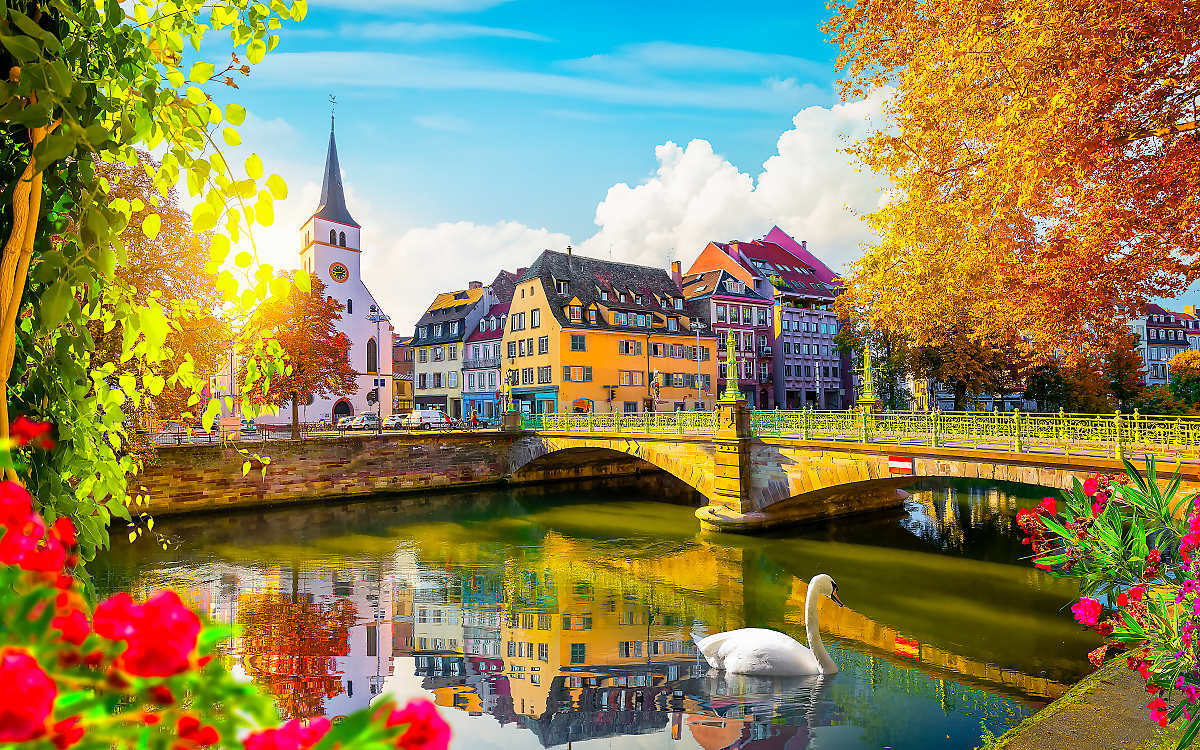
Strasbourg
Strasbourg
Strasbourg, the capital of the Grand Est region in northeastern France, is a captivating city that seamlessly blends French and Germanic influences.
Known for its picturesque half-timbered houses, vibrant culinary scene and rich history, Strasbourg makes for an unforgettable travel destination. Whether you are visiting to immerse yourself in the city’s cultural heritage, savor local Alsatian wines or simply wander through charming cobblestone streets, this guide will help you plan the ultimate getaway.
Welcome to Strasbourg
Situated on the Rhine River, Strasbourg serves as a cultural crossroads and is often recognized as the official seat of the European Parliament. However, there is so much more to this city than its political significance. Strasbourg’s historic center, known as the Grande Île, is a UNESCO World Heritage Site, featuring medieval architecture, canals and centuries-old churches. Beyond the iconic Cathedral of Notre-Dame, you will find hidden passageways leading to cozy winstubs (traditional Alsatian wine bars), lively street markets and a medley of cultural events.
Alsace, the region surrounding Strasbourg, is celebrated for its wine route-an area brimming with vineyards where Alsatian wines such as Riesling, Gewurztraminer and Pinot Gris are produced. Food lovers will be equally enchanted by the city’s culinary offerings: think tarte flambée, choucroute garnie and hearty spaetzle. In short, Strasbourg is a feast for the senses, offering something special to all types of travelers.
Best Time to Visit
Strasbourg has a temperate climate with warm summers and cool winters. The city’s proximity to the Vosges Mountains and the Rhine River influences its weather patterns, making it relatively humid year-round. Here is a quick overview of what to expect:
- Spring (March to May): Milder temperatures begin to surface. Flowers bloom across the city and café terraces open up for people-watching under a gentle sun.
- Summer (June to August): Warm days can reach up to 30°C (86°F) and festivities are in full swing. Ideal for boat tours and leisurely canal-side strolls.
- Autumn (September to November): The vineyards just outside the city transform into a tapestry of gold and red. This period also marks the grape harvest season-perfect for wine enthusiasts.
- Winter (December to February): The city dazzles with fairy-tale Christmas markets and temperatures can dip below freezing. The festive atmosphere with hot mulled wine and twinkling lights, is truly magical.
Best Time to Visit: If you are looking for moderate weather and fewer crowds, late spring and early autumn are excellent choices. However, the Christmas market season (late November to December) offers a unique charm-just come prepared for chilly weather!
Top Attractions in Strasbourg
Strasbourg Cathedral (Cathédrale Notre-Dame de Strasbourg)
This Gothic masterpiece, completed in 1439, dominates the Strasbourg skyline. Famous for its intricate facade and 142-meter spire, it was once the tallest building in the world. Inside, marvel at the medieval stained-glass windows and the Astronomical Clock which springs to life at 12:30 PM daily with a fascinating parade of mechanical figures.
La Petite France
A UNESCO World Heritage area, La Petite France is known for its postcard-perfect half-timbered houses, cobblestone streets and scenic canals. Originally the tanners’ district, it is now home to quaint shops, gastronomic restaurants and scenic river views. Don’t miss the Ponts Couverts (Covered Bridges) and the Vauban Dam for panoramic vistas.
European Institutions
Strasbourg hosts several major European institutions, including the European Parliament, Council of Europe and European Court of Human Rights. Visitors can tour the European Parliament building to learn about European politics and democracy. Even if you are not a political buff, the modern architecture contrasts beautifully with Strasbourg’s historic core.
Palais Rohan
Often referred to as the “mini Versailles,” Palais Rohan is a grand 18th-century palace situated near the cathedral. It houses three museums: the Musée des Beaux-Arts (Fine Arts), the Musée Archéologique (Archeological) and the Musée des Arts Décoratifs (Decorative Arts). Even if museums aren’t your main interest, the palace’s opulent interiors are well worth a visit.
Strasbourg Historical Museum
For a deep dive into the city’s turbulent past and Franco-German heritage, head to the Musée Historique de la Ville de Strasbourg. Its exhibits span from the Middle Ages to modern times, offering insights into how Strasbourg evolved into the cultural and political hub it is today.
Église Saint-Thomas
Also known as St. Thomas Church, this Lutheran church showcases a blend of Gothic and Romanesque architectural styles. Music lovers can catch organ recitals here as the church is renowned for its historic organs, one of which was played by Wolfgang Amadeus Mozart.
Activities
Family-Friendly Fun
- Boat Tour on the River Ill: Batorama offers guided boat tours that circle the Grande Île, providing a relaxing way to see the city’s highlights. Children will love cruising under historic bridges and spotting swans along the canal banks.
- Parc de l’Orangerie: Located near the European Parliament, this park features a small zoo, lake and playground-an ideal spot for a picnic or leisurely walk.
Nightlife and Entertainment
- Kléber Square and Surrounding Bars: The city center buzzes with energy once the sun goes down. Trendy bars and pubs line the streets around Place Kléber where you can savor local beers or artisanal cocktails.
- Opera National du Rhin: For a cultural evening, catch an opera, ballet or classical concert at this historic venue.
- Winstubs: Experience authentic Alsatian nightlife at these cozy wine bars. Sample local wines, flammekueche (tarte flambée) and mingle with residents in a friendly, laid-back setting.
For Traveling Couples
- Romantic Canal Walks: Wander hand-in-hand through La Petite France. The atmospheric lamplights and reflections in the water create a dreamy setting for couples.
- Alsace Wine Route Day Trip: Book a guided tour or rent a car to explore the scenic Alsace Wine Route, visiting charming villages like Riquewihr and Obernai to sample wines amid rolling vineyards.
Events and Festivals
- Strasbourg Christmas Market (Marché de Noël): One of Europe’s oldest and largest Christmas markets. From late November to December, the city center transforms into a winter wonderland filled with festive lights, craft stalls and the alluring aroma of mulled wine and gingerbread.
- Strasbourg Mon Amour Festival (February): A 10-day celebration around Valentine’s Day that includes concerts, romantic tours and special events for lovebirds.
- Fête de la Musique (June 21): A national music festival that sees streets, squares and bars host free concerts spanning multiple genres.
- Strasbourg European Fantastic Film Festival (September): Showcasing horror, sci-fi and fantasy films at various venues throughout the city, it is a must-visit for movie buffs.
- Street Art Festival (Summer): Local and international street artists gather to create murals and graffiti art around Strasbourg, highlighting contemporary urban culture.
Wine and Cuisine
Wine Varieties
- Riesling: A dry, aromatic white wine characterized by high acidity and notes of citrus and mineral.
- Gewurztraminer: Known for its spicy and floral aromas, this off-dry wine pairs beautifully with rich dishes and strong cheeses.
- Pinot Gris, Pinot Blanc and Pinot Noir: These varietals round out the Alsace wine spectrum, each bringing unique flavors perfect for everything from aperitifs to dessert.
Culinary Specialties
- Tarte Flambée (Flammekueche): A thin crust topped with crème fraîche, onions and bacon. Variations may include cheese or mushrooms.
- Choucroute Garnie: A hearty dish of sauerkraut served with assorted meats like sausages, ham and smoked pork.
- Baeckeoffe: A traditional casserole featuring marinated meats (lamb, pork, beef) cooked slowly with potatoes and onions in white wine.
- Spaetzle: A type of soft egg noodle often served as a side dish to soak up rich sauces.
- Kougelhopf: A yeasted cake with raisins and almonds, baked in a distinctive tall, round mold. Perfect for breakfast or afternoon coffee.
While exploring Strasbourg, be sure to drop by the local markets, such as the Broglie Market or the Gare Market, for fresh produce, cheese and bread. The city also offers a vibrant street food scene, giving you a chance to sample modern twists on Alsatian classics.
Culture and Etiquette
- Language: French is the official language but you may also hear Alsatian (a Germanic dialect) and standard German. English is widely spoken in tourist areas, though a few polite French phrases will always be appreciated.
- Greeting Customs: A friendly “Bonjour” followed by a handshake or a light kiss on each cheek (among acquaintances) is common.
- Dining Etiquette: It is respectful to wait until everyone at the table has been served before starting your meal. Bread is typically placed on the table rather than on the plate.
- Punctuality: While not as strict as in neighboring Germany, arriving on time for appointments or reservations is generally expected.
- Dress Code: Smart casual is acceptable in most places but upscale restaurants may require more formal attire.
Getting Around Strasbourg
Public Transportation
Strasbourg boasts an efficient network of trams and buses operated by the CTS (Compagnie des Transports Strasbourgeois). Tickets are available at tram stops or via mobile apps. A single ticket is valid for 1 hour of unlimited transfers in one direction.
Cycling
Often called one of France’s most bike-friendly cities, Strasbourg has an extensive network of cycling paths. Bike-sharing services like Vélhop make renting a bicycle simple and affordable.
Walking
The city center is compact and many of the major sights are within walking distance. Strolling through the Grande Île and La Petite France is one of the best ways to absorb Strasbourg’s historic and architectural charm.
Car Rental and Parking
If you plan on exploring the Alsace wine route or visiting the Vosges Mountains, renting a car can be convenient. However, parking in the city center can be pricey and limited. Opt for one of the city’s park-and-ride facilities if you want to leave the car and continue by tram into the center.
Trains and Regional Connections
Strasbourg is well connected by high-speed TGV trains to other major French cities like Paris and Lyon as well as to German cities like Frankfurt. The central train station (Gare de Strasbourg) is a short walk or tram ride from the city center.
Off-the-Beaten-Path Experiences
- Neustadt District: Often overshadowed by the Grande Île, this late 19th-century district is brimming with grand boulevards and neoclassical buildings. A stroll here reveals Strasbourg’s Germanic influences following the Franco-Prussian War.
- Krutenau Neighborhood: Situated along the Ill River, Krutenau is a lively area filled with art galleries, independent boutiques and artisanal cafés. It is also the center of student life, thanks to its proximity to the university.
- Wine Villages Near Strasbourg: Consider day trips to places like Obernai, Molsheim or Barr. These postcard-worthy towns offer traditional Alsatian half-timbered houses, local wineries and scenic walking trails.
- Covered Bridges at Night: Although the Ponts Couverts are popular during the day, visiting them after sunset provides a quieter experience. The illuminated skyline and reflections on the water create a magical ambiance.
Local Tips for an Easy Stay
- Currency: France uses the Euro (€).
- Cards and ATMs: Credit and debit cards are widely accepted. ATMs are plentiful, especially around the city center. Small shops and markets may require cash, so keep some euros on hand.
- Tipping: Service is included in most restaurant bills. However, it is common to leave a small tip (around 5–10%) if you are satisfied with the service.
- Money-Saving Hacks:
- Look for daily lunch menus (formules du midi) which are often more affordable.
- Take advantage of city passes for discounted museum entries and free public transport rides.
- Visit free attractions like the Cathedral (the main entry is free; the climb up the tower has a fee) and strolling through neighborhood markets.
- Language Essentials: Knowing a few key phrases in French-such as “Bonjour” (hello), “Merci” (thank you), and “S’il vous plaît” (please)-will enhance your interactions with locals.
- Travel Documents: EU citizens can travel freely. Non-EU visitors should ensure they have valid passports and any required visas.
- Emergency Numbers: Dial 112 for general emergencies.
Safety and Practical Tips
- General Safety: Strasbourg is generally safe, but always be mindful of pickpockets in crowded areas or tourist hotspots like the cathedral square and during large events.
- Secure Your Belongings: Keep an eye on purses, backpacks and electronics. Consider using a cross-body bag or money belt for valuables.
- Late-Night Transport: Public transit remains reliable into the evening, though schedules are reduced after midnight. Taxis and ridesharing apps (like Uber) are widely available if you are staying out late.
- Health Precautions: Pharmacies (green cross sign) can advise on minor ailments. For more serious issues, hospitals and clinics are accessible with EU health cards or valid travel insurance.
This is Strasbourg
Strasbourg’s unique mix of French and Germanic heritage, its world-class wines and its historic landmarks create a multi-layered experience that few cities can match. From the storybook setting of La Petite France to the modern European Parliament, Strasbourg offers a range of activities to suit every traveler’s interests.
Come for the culinary delights-tarte flambée, choucroute and fine Alsatian wines-and stay for the cultural immersion, where centuries of history meet a dynamic modern lifestyle. Whether you are exploring renowned attractions like the iconic Strasbourg Cathedral or venturing off the beaten path into charming nearby wine villages, you will find that Strasbourg’s warmth, hospitality and rich heritage make it an unforgettable destination.