
Image Credit: A.S.O. / © Pauline Ballet
Tour de France
The Tour de France is not just the world’s most prestigious cycling race-it’s a French institution.
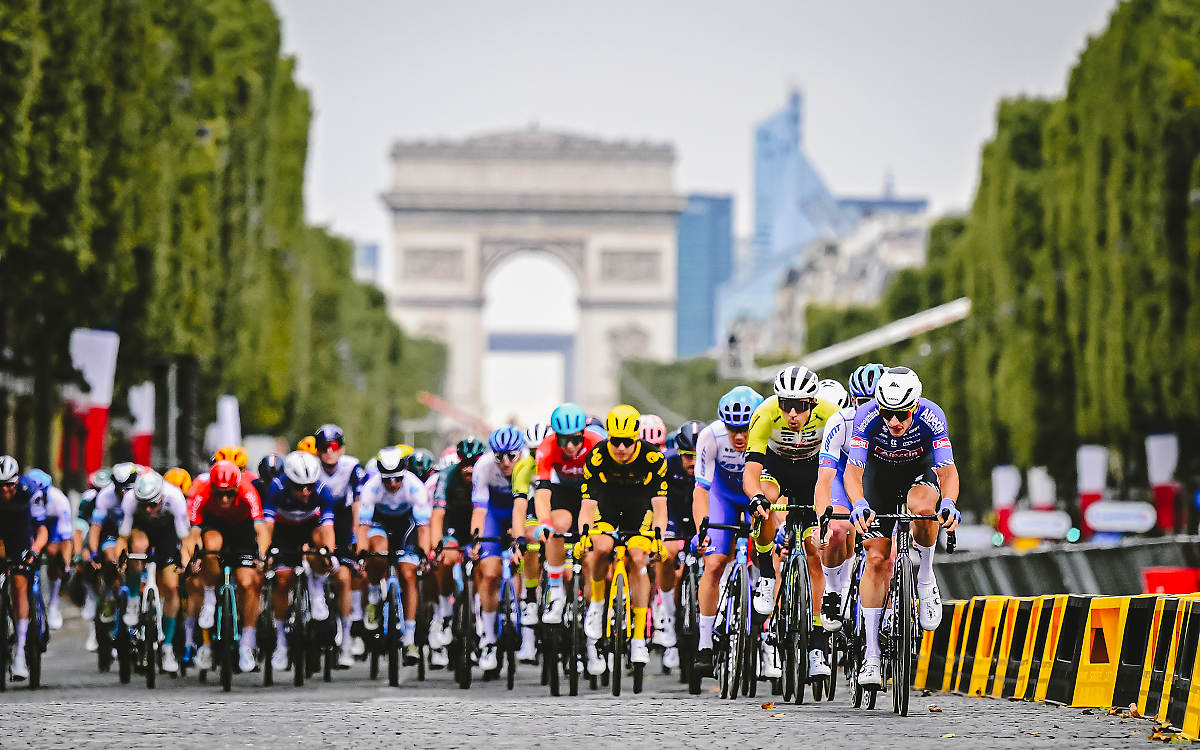
Held every summer, this multi-stage competition takes riders through some of France’s most beautiful and diverse landscapes: from serene villages to the towering peaks of the Alps and Pyrenees, all culminating in a final, adrenaline-charged dash down the Champs-Élysées in Paris. If you’re planning a trip to immerse yourself in French culture, indulge in its culinary delights, and catch the thrill of top-tier athleticism, there’s no better way than to follow the Tour de France.
The Tour de France is truly a spectacle like no other in the sports world. Millions of fans line French roadsides each July to cheer on elite cyclists braving grueling climbs, swift sprints, and intense time trials. At the heart of it all is France itself: a richly varied country, alive with tradition, gastronomy, and vibrant local cultures that transform the Tour into a yearly national festival.
No matter your level of interest in cycling, witnessing the Tour de France in person is an unforgettable experience. Locals set up picnics in village squares, families gather along country lanes, and travelers flock to famous mountain passes. The excitement of the race is interwoven with quintessentially French sights and flavors, offering an unparalleled window into the nation’s soul.
History of the Tour de France
Early Years (1903–1910)
The Tour de France sprang to life in 1903 as a bold promotion for the French newspaper L’Auto. Sports journalist Géo Lefèvre proposed a multi-stage race around France to elevate the paper’s circulation, and his editor Henri Desgrange seized on the idea. The inaugural Tour consisted of just six daunting stages, each spanning long distances on rough roads. Maurice Garin claimed victory in that first race, forever etching his name in cycling history.
The Tour’s early years were marked by extreme challenges. Unpaved roads, rudimentary bicycles, and the absence of sophisticated support systems made each stage a test of pure grit. Riders pedaled through the night, often resorting to raw physical stamina and whatever local resources they could find to keep going-some even taking wine or brandy along the route to dull the pain!
Growth and Popularization (1910s–1930s)
By the 1910s, the Tour de France was evolving rapidly. Mountain passes in the Pyrenees were introduced in 1910, immediately adding drama and difficulty. The legendary “Circle of Death”-high-altitude climbs like the Col du Tourmalet-tested riders’ mettle, creating icons and stirring intense public fascination.
World War I interrupted the Tour from 1915 to 1918. Upon its resumption in 1919, the iconic yellow jersey (the maillot jaune) was introduced so race leader Eugène Christophe would stand out in press coverage. This distinctive garment quickly became a cherished symbol of cycling excellence.
Post-War Period and Nationalism (1940s–1960s)
After World War II, the Tour de France turned into an emblem of reconstruction and hope. European economies were rebuilding, and the race gained a more international flavor as riders from outside France entered with aspirations of glory. It was during this time that riders like Fausto Coppi from Italy and Louison Bobet from France rose to prominence, captivating fans with their grit and grace on mountainous terrain.
This era also saw the Tour become an annual showcase of sports nationalism. Each victory and jersey earned by a home rider sparked fervent celebrations across France, while foreign winners gained heroic status in their own countries. The media coverage boomed, and the Tour de France cemented itself as a fixture of the French summer.
Modernization and Global Appeal (1970s–Present)
From the 1970s onward, the Tour embraced new technologies and broadened its international reach. Television broadcasts brought the race into living rooms worldwide, intensifying global fan support. The dominance of riders like Eddy Merckx and Bernard Hinault made headlines, elevating the Tour to near-mythical status.
In more recent decades, improved roads, advanced bikes, and sophisticated team strategies have transformed the race. High-tech support vehicles, sports science, and rigorous training regimens have become standard. Contemporary legends, including Miguel Indurain, Lance Armstrong, Chris Froome, and Tadej Pogačar, have further solidified the Tour de France as the pinnacle of competitive cycling.
Yet for all its modern trappings, the Tour never lost its essential spirit-a celebration of human endurance and the awe-inspiring beauty of France’s diverse terrain.
3. Legendary Races: Iconic Moments in Tour History
Some editions of the Tour de France-and certain stages within them-have become near-mythical, drawing cycling enthusiasts into endless debates about who delivered the most awe-inspiring performance. Below are a few of the most iconic moments:
The 1969 Tour (Eddy Merckx’s Domination)
Nicknamed “The Cannibal,” Eddy Merckx of Belgium achieved a feat never equaled: he won the general classification (overall title), points classification (best sprinter), and mountains classification (King of the Mountains) in the same year. His all-around dominance showcased an extraordinary talent that redefined what it meant to be a complete cyclist.
1986 Tour (Greg LeMond vs. Bernard Hinault)
One of the most intense teammate rivalries in the history of the sport. After Bernard Hinault had seemingly promised to help Greg LeMond secure a win (repaying a favor from the previous year), the French champion launched unexpected attacks on the American up the mountains. Ultimately, LeMond emerged victorious, but their infamous battles tested the boundaries of alliances and tactics.
1989 Tour (LeMond’s 8-Second Triumph)
Greg LeMond’s final-day time-trial win over Laurent Fignon remains the closest finish in Tour history. Starting the last stage trailing by 50 seconds, LeMond used an aerodynamic helmet and a triathlon handlebar setup that was still new to cycling. He beat Fignon by 58 seconds, clinching victory by a mere eight seconds overall-a hair’s breadth after three weeks of racing.
2019 Tour (Egan Bernal’s Breakthrough)
Egan Bernal became the first Colombian (and the first Latin American) to win the Tour. At just 22 years old, he also became one of the youngest champions, showcasing the rise of a new generation of talent from South America and cementing his place in cycling lore.
These legendary races underline the drama and unpredictability that define the Tour de France. Whether it’s a fierce competition between teammates, a razor-thin margin of victory, or a display of unmatched dominance, each Tour has the potential to produce a moment that will resonate through the ages.
Legendary Winners
Over the decades, the Tour de France has been shaped by riders whose victories transcend mere statistics, becoming the stuff of sporting legend. From endurance machines who redefined success to tacticians who outsmarted stronger rivals, these legendary winners remain enduring symbols of the Tour’s grandeur and allure.
Jacques Anquetil (France)
A pioneer of time-trial mastery, Anquetil became the first cyclist to win the Tour de France five times (1957, 1961, 1962, 1963, 1964). Nicknamed “Monsieur Chrono,” he dominated races against the clock and set the standard for multi-Grand Tour strategy, crafting a blueprint future winners would follow.
Eddy Merckx (Belgium)
Widely considered the greatest cyclist of all time, Merckx-known as “The Cannibal”-secured five Tour de France victories (1969, 1970, 1971, 1972, 1974). His all-encompassing dominance saw him claim almost every jersey classification, and his relentless hunger for wins made him the embodiment of a champion. Merckx’s era sparked the Tour’s global appeal, inspiring generations of riders.
Bernard Hinault (France)
Fierce, combative, and supremely confident, “The Badger” earned five Tour victories (1978, 1979, 1981, 1982, 1985) and remains France’s last homegrown champion. His on-bike battles and refusal to back down, even against teammates, have become legendary tales of strategic and mental fortitude.
Miguel Indurain (Spain)
Standing out with his calm demeanor and smooth pedaling style, Indurain dominated the Tour during the early 1990s (1991–1995). He was the first to win five consecutive Tours, leveraging a powerful time-trial prowess and measured energy usage in the mountains. His reign ushered in a new era of precision training and science-backed tactics.
Chris Froome (Great Britain)
One of the leading figures of the modern era, Froome boasts four Tour wins (2013, 2015, 2016, 2017). Recognized for his distinctive climbing style and ability to time-trial effectively, Froome’s triumphs helped reinvigorate global interest in the race. His battles on iconic climbs like Mont Ventoux and the Col du Tourmalet brought fresh drama to the Tour.
These legendary champions have left indelible marks on the Tour de France. Their grand performances-from jaw-dropping breakaways to last-second time-trial triumphs-continue to inspire current and aspiring cyclists worldwide. As records fall and new stars emerge, the tradition of Tour de France greatness marches on, fueled by the same spirit of ambition, endurance, and unrelenting passion that has defined the race since its earliest days.
Planning Your Trip Around the Tour
Choosing the Right Stages
Every Tour de France is broken into 21 stages spread out over three weeks. These include flat sprinters’ stages, punishing mountain climbs, and high-speed time trials. Here’s how to pick your vantage point:
- Mountain Stages: If you want high drama, head for the Alps or Pyrenees. The riders slow down on steep climbs, giving you more time to see them and feed off the crowd’s intense energy.
- City Starts and Finishes: Many big cities host stage starts or finishes. This can be ideal if you want a mix of race-viewing and sightseeing. Paris, obviously, is the pinnacle with the final stage on the Champs-Élysées.
- Local Festivals: Smaller towns often throw street parties and markets to celebrate the Tour’s arrival. These festivities offer a glimpse of local culture at its most vibrant.
Booking Early
The Tour de France is a beloved event with a large, international following. Accommodations in host towns can fill up months in advance. To avoid disappointment:
- Hotels and Guesthouses: Book as soon as the official Tour route is announced (typically in October of the prior year).
- Camping: An affordable, immersive way to experience rural France. Campsites near major climbs or stage towns often fill quickly.
- Transportation: If you plan to rent a car, secure your reservation early. Alternatively, explore France’s efficient train network (SNCF) and local bus services.
Budget Tips
- Dining: Pick up supplies at local markets for picnic lunches. French bread, cheese, and charcuterie can be enjoyed inexpensively while you wait for the peloton to pass.
- Travel: Regional trains can be more cost-effective than domestic flights. Booking in advance often secures better fares.
- Off-peak Tourism: Stage towns might still have availability a few kilometers away from the race route. Staying slightly outside the host town can lead to lower prices and an easy drive to the action.
Making the Most of the Race Experience
Prime Viewing Spots
- Mountain Passes: Serpentine switchbacks in the high mountains provide spectacular views and a carnival-like atmosphere. Fans often camp out overnight to snag a front-row seat.
- Time Trials: Individual races against the clock let you see each cyclist up close in rapid succession. These typically occur in or near major cities, drawing large crowds.
- Stage Departures and Arrivals: At the start, teams sign in, and fans can get autographs. At the finish, giant screens show the entire race as you anticipate the sprint or final climb.
The Publicity Caravan
Arrive early to experience the publicity caravan, which rolls through about an hour before the cyclists. Cheerful drivers on sponsor floats toss out freebies and create a lively, family-friendly atmosphere. It’s a unique tradition that has delighted spectators for decades.
Roadside Etiquette
- Barriers: Never cross race barriers. They’re there for safety.
- Children and Pets: Keep them under close watch, as cyclists and their support vehicles pass at high speed.
- Respect: Avoid running alongside the cyclists or trying to capture a selfie in the middle of the road. Such actions can be dangerous and disrespectful to the competitors.
Exploring France Along the Way
Culinary Highlights
France’s culinary scene is as diverse as its landscapes:
- Provence: Known for fresh produce, fragrant herbs, rosé wines, and the fish stew called bouillabaisse.
- Brittany: Crêpes, galettes (savory buckwheat crêpes), and artisanal ciders are a must-try.
- Alsace: Sample choucroute garnie (sauerkraut with sausages and meats) and some of the country’s best white wines.
- Southwest (Occitanie and Basque Country): Foie gras, cassoulet, and a fusion of French-Spanish culinary traditions.
- Normandy: Creamy cheeses like camembert, plus apple-based specialties such as cider and calvados.
Taking a food tour in each region will elevate your appreciation not just of the Tour de France, but also of the splendid gastronomic culture that unifies the nation through regional pride.
Cultural and Historical Gems
- Château Visits: Many Tour routes pass near magnificent châteaus, especially along the Loire Valley. Perfect for history buffs.
- Medieval Towns: Carcassonne in the South, or smaller walled cities throughout France, offer a journey back in time.
- Museums: Don’t miss world-famous institutions like the Louvre in Paris or delve into regional exhibits highlighting local art, history, and traditions.
- Festivals: Summer is festival season. Whether you’re into music, theater, wine, or harvest celebrations, you’ll find a host of lively events running parallel to the Tour’s schedule.
Outdoor Activities
Feeling inspired by the peloton? You can cycle parts of the Tour’s route yourself if you’re up for the challenge. Even if you’re not a seasoned cyclist, renting an e-bike in the Alps or Pyrenees can help you conquer some of the gentler climbs. Additionally, France offers a wealth of hiking trails, rock climbing spots, and water sports options near coastal stages.
Enjoying the Final Stage in Paris
The Tour de France traditionally wraps up on Paris’s iconic Champs-Élysées, providing a grand finale:
- Staking Out a Spot: Arrive early and find a place near the Arc de Triomphe or along the famous boulevard. It’s a hot ticket-thousands crowd in to see the sprinters battle it out on the final day.
- Big Screens: Giant screens along the route ensure you won’t miss any of the action happening on the earlier laps of the circuit.
- Victory Lap: After the race concludes and the winner is crowned, you can often see riders taking celebratory laps. It’s an ideal moment for photos and a last glimpse of your favorite athletes.
Watching the final stage in Paris delivers a vibrant blend of sports and city life, with the French capital’s cafés, shops, and museums right at your doorstep.
Experience the Tour de France
The Tour de France offers an unparalleled way to experience the richness of French culture while witnessing one of the world’s most demanding athletic events. From its early-20th-century roots as a newspaper promotion to the global phenomenon it is today, the Tour has become woven into the tapestry of French life. It’s given rise to historic showdowns in the mountains, nail-biting sprints, and iconic moments that captivate millions around the globe.
By planning your trip around the stages that intrigue you the most-be it mountainous epics, city-centric sprints, or that unforgettable finish in Paris-you’ll be rewarded not just with memorable cycling action, but also with a deep dive into the regions, traditions, and flavors of France. The Tour brings people together, uniting local fans, international travelers, and the best cyclists in the world in a communal celebration of endurance, perseverance, and the unbreakable human spirit. Whether you consider yourself a passionate cycling aficionado or simply a curious traveler seeking adventure, the Tour de France provides a holiday experience like no other. Embrace the excitement, enjoy the journey, and get ready to make memories that will last a lifetime.