
Marseille
Marseille
Marseille, perched on the sun-drenched southeastern coast of France, is a city of enchanting contrasts-a vibrant blend of ancient history, maritime heritage and a flourishing contemporary art scene.
From strolling along its iconic harbor to savoring local wines in hidden bistros, the city offers a compelling tapestry of experiences for travelers of all ages. This guide delves into the best of Marseille, touching upon its climate, top attractions, must-try cuisine, cultural nuances and practical tips to help you navigate this Mediterranean jewel with ease.
Marseille – Explore France’s Vibrant Coastal Gem
Marseille’s strategic location on the French Riviera positions it as a cultural crossroads in the heart of Provence. Founded by the Greeks more than 2,600 years ago, it proudly wears the title of France’s oldest city. Today, Marseille stands as the country’s second-largest metropolitan area, brimming with Old World charm and modern energy.
- A Meeting of Cultures: Centuries of maritime trade and migration have molded Marseille into a multicultural hub where French and North African influences, among others, come together in the city’s cuisine, architecture and street life.
- A Coastal Paradise: With the Mediterranean Sea lapping at its shores, Marseille’s coastal appeal is undeniable. Turquoise waters, rugged limestone cliffs and hidden coves set the scene for scenic boat rides, beach visits and breathtaking hikes.
- Gastronomic Delights: Renowned for its seafood-based dishes-like the iconic bouillabaisse-Marseille entices food lovers with a wide array of Provencal specialties, locally produced wines and delicious street eats.
Whether you are a history buff, a gastronomic adventurer or a family looking for a sun-soaked vacation, Marseille has something to captivate every traveler.
Best Time to Visit
Mediterranean Climate: Marseille enjoys a classic Mediterranean climate, with mild winters and hot, dry summers. The region sees plenty of sunshine year-round, making it an appealing destination in any season.
- Spring (March–May): Temperatures range from the mid-50s to low 70s (°F). This season is ideal for exploring the city’s monuments and gardens as well as enjoying fewer crowds.
- Summer (June–August): Expect long, sunny days with temperatures often climbing into the high 80s (°F). While this is peak tourist season, it is also perfect for swimming in the Mediterranean, attending outdoor festivals and basking in the lively atmosphere.
- Autumn (September–November): Cooling down from the summer heat, autumn offers comfortable weather in the mid-60s to mid-70s (°F). Early fall is a great time for wine-tasting excursions and scenic coastal hikes.
- Winter (December–February): Winters are relatively mild, with temperatures hovering in the 50s (°F). While the city is less crowded it maintains a pleasant charm, perfect for exploring museums and indoor cultural events.
If you are aiming for warmer weather but want to avoid peak-season crowds, late spring and early autumn are your best bet.
Top Attractions in Marseille
Vieux-Port (Old Port)
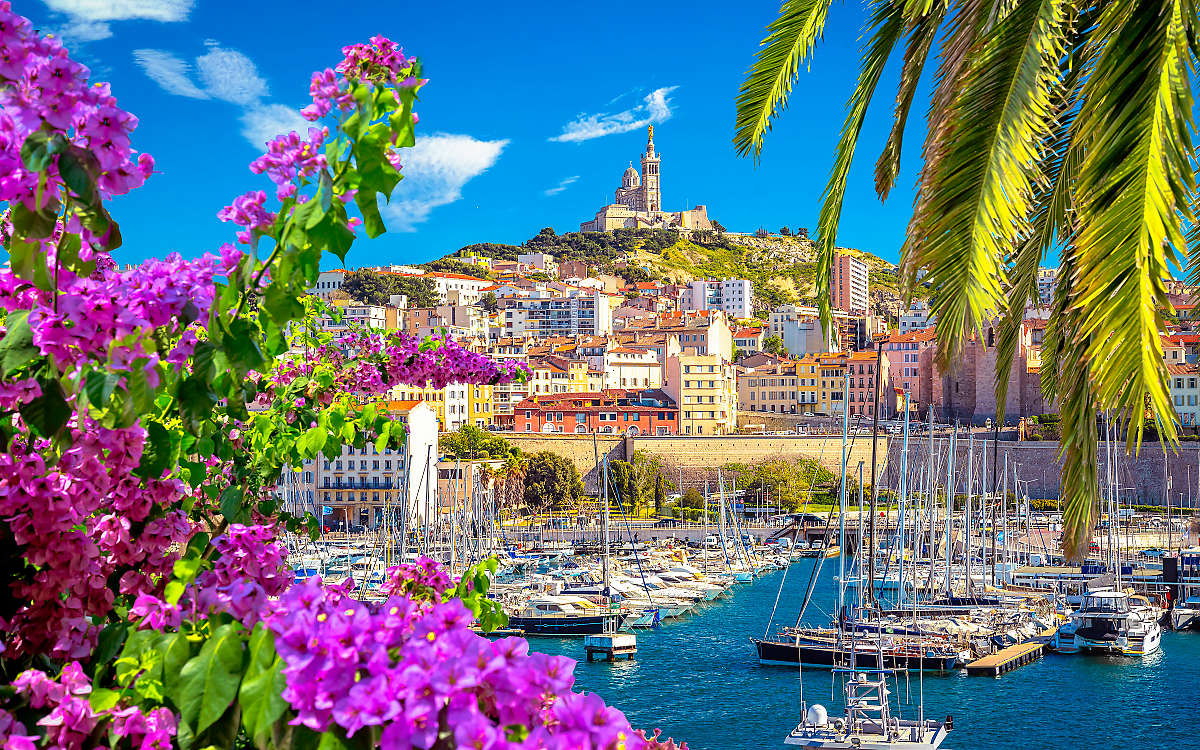
The Vieux-Port stands as the historic heart of Marseille. Traditional fishing boats line the quays where fishermen sell their morning catch directly to locals. Surrounded by cafés and restaurants the area comes alive at sunset, offering spectacular views of the city’s skyline and the shimmering Mediterranean.
Basilique Notre-Dame de la Garde
Perched on a hill overlooking the city, the Basilique Notre-Dame de la Garde is a magnificent monument dedicated to the patron saint of Marseille. Often simply called “La Bonne Mère,” it features a gilded statue of the Virgin Mary and Child. Climb or take the tourist train to the top for breathtaking panoramic views of the city and coastline.
Le Panier District
One of the oldest neighborhoods in Marseille, Le Panier charms with its narrow, winding streets, pastel-colored houses and street art at every turn. Do not miss the Vieille Charité, a 17th-century almshouse-turned-cultural center featuring museums and art exhibitions.
MuCEM (Museum of European and Mediterranean Civilizations)
An architectural marvel at the entrance of the harbor, MuCEM celebrates the cultural diversity and shared history of Mediterranean countries. The exhibits cover art, photography and anthropological artifacts while the rooftop terrace offers a stunning view of Fort Saint-Jean and the sea.
Fort Saint-Jean
Originally built in the 17th century, Fort Saint-Jean now hosts beautiful gardens and walkways that connect seamlessly to MuCEM. Exploring this historical complex gives insight into Marseille’s military and trading past.
Cathédrale de la Major
Situated near the port, the Cathédrale de la Major is an impressive Neo-Byzantine structure that stands as one of the largest cathedrals in France. Its intricate mosaic designs and stunning domes are a feast for the eyes, reflecting Marseille’s religious and cultural heritage.
Activities
Family-Friendly Adventures
- Boat Tours to the Calanques: Rugged limestone cliffs and turquoise waters await just outside Marseille in the Calanques National Park. Families can hop on guided boat tours to discover hidden coves and scenic landscapes.
- Marseille Aquarium (Aquarium du Palais Longchamp): Perfect for children and those curious about marine life, this aquarium offers an educational glimpse into Mediterranean sea creatures and beyond.
Nightlife and Evening Entertainment
- La Friche La Belle de Mai: A cultural hotspot hosting art exhibitions, rooftop parties and concerts. It is also home to outdoor cinemas during the summer months.
- Cours Julien: Known for its trendy bars, graffiti art and bohemian atmosphere, this area is a favorite among locals for late-night drinks and live music.
Activities for Traveling Couples
- Romantic Stroll along the Corniche: The Corniche Kennedy is a picturesque coastal road offering mesmerizing views of the sea. An evening walk here is ideal for couples seeking a serene and scenic outing.
- Sunset Cruise on the Mediterranean: Couples can book a private boat ride or join a group cruise to watch the sun dip into the sea, often accompanied by a glass of local rosé.
Annual Events and Festivities
Marseille’s cultural calendar is packed with celebrations that reflect its diverse heritage and passion for the arts.
- La Fête du Panier (June): A lively neighborhood festival in the historic Le Panier district, featuring music, dance and local crafts.
- Festival de Marseille (June–July): Showcasing dance, theater and visual arts, this multi-week event draws international artists and performers to the city.
- Quai du Livre (Various dates): Held along the Old Port, this book fair is a must for literature lovers, offering vintage, rare and contemporary books.
- Christmas Market at Vieux-Port (December): Like many French cities, Marseille hosts a charming Christmas market offering festive treats, artisanal goods and a cozy ambiance.
Wine and Cuisine: A Delicious Dive into Marseille’s Food Scene
Iconic Local Dishes
- Bouillabaisse: The city’s signature dish, traditionally made with rockfish, shellfish and a rich saffron-infused broth. Typically served with rouille (a garlic and red-pepper sauce) and toasted bread.
- Panisse: A chickpea flour fritter, crispy on the outside and soft on the inside, often enjoyed as a snack or appetizer.
- Pieds et Paquets: A classic dish consisting of stuffed sheep tripe and trotters, slowly stewed in a tomato-wine sauce. It might be an acquired taste, but it is a cornerstone of Marseille’s traditional cuisine.
Provençal Wines
While Marseille itself doesn’t produce wine within city limits, it is surrounded by renowned wine regions in Provence, making it an excellent base for wine tours. Top varietals include:
- Rosé Wines: Provence is known worldwide for its refreshing rosés. Look out for appellations like Côtes de Provence and Bandol.
- Reds and Whites: The region also produces robust reds from Grenache, Mourvèdre and Syrah grapes, along with crisp whites that pair beautifully with seafood.
Culinary Experiences
- Seafood at Vieux-Port: Enjoy a meal at the water’s edge, sampling freshly caught fish of the day. Many restaurants will proudly display their catches, ensuring top-notch quality.
- Food Markets: Marseille’s vibrant markets, such as Marché des Capucins and Noailles, overflow with fresh produce, spices and local specialties. Stroll through to taste the city’s multicultural flavors.
- Cooking Classes: For a hands-on culinary adventure, enroll in a bouillabaisse or Provençal cooking class. You will learn age-old techniques and bring home the authentic flavors of Marseille.
Embracing the Local Culture and Etiquette
Marseille’s culture reflects its identity as a port city that has welcomed travelers for centuries. While you will find a laid-back atmosphere, there are still a few etiquette tips to keep in mind:
- Greetings: A warm “Bonjour” when entering shops or cafes goes a long way. If you speak French, even basic phrases are appreciated.
- Dining Etiquette: The French typically spend more time at meals, savoring each course. Do not rush. Enjoy conversation and the culinary journey.
- Dress Code: Marseille is relatively casual but locals tend to dress stylishly. For church visits, make sure to dress modestly (covering shoulders and knees).
- Behavior: Like in many European cities, keep voices to a moderate level, especially in residential areas.
Getting Around Marseille
Public Transportation
- Metro and Tram: Marseille has two metro lines (M1 and M2) and several tram lines that cover major parts of the city. Tickets can be purchased at kiosks or through the RTM (Régie des Transports de Marseille) app.
- Buses: The city boasts an extensive bus network which can be more scenic but occasionally subject to traffic delays.
- Ferry Boat: A fun option is the “Navette du Vieux-Port,” a short ferry crossing from one side of the Old Port to the other. It is a quick ride but offers a fresh perspective on the harbor.
Taxis and Ride-Sharing
Taxis are available throughout the city though they can be more expensive. Ride-sharing services (like Uber) operate as well, often at slightly more affordable prices than traditional cabs.
Car Rentals
Renting a car is useful if you plan to explore Provence or the Calanques at your own pace. However, be mindful that Marseille’s traffic can be congested and parking in the city center is sometimes challenging.
Cycling and Electric Scooters
Marseille has a growing network of bike lanes and rental bikes and electric scooters are readily available. Always remember to wear a helmet and respect local traffic regulations, as the city can be busy.
Off-the-Beaten-Path Experiences
Venture beyond the well-known sites to uncover Marseille’s hidden gems:
- Les Goudes: This secluded fishing village at the edge of the city feels like a world apart. Stroll along its quiet harbor, savor fresh seafood and bask in panoramic Mediterranean views.
- Chapelle de la Vieille Charité (in Le Panier): While the Vieille Charité’s museum is popular, the attached Baroque chapel is often overlooked. Its courtyard hosts occasional performances, adding to its secret charm.
- Street Art Tours: Marseille’s vibrant street art scene can be found in neighborhoods like Cours Julien and Le Panier. Guided tours help you interpret the graffiti and murals that bring the city’s walls to life.
- Hiking in the Calanques: While boat tours of the Calanques are a must-do, consider a guided hike if you are up for adventure. The craggy trails lead to hidden beaches perfect for a cooling dip.
Local Tips
- Currency: France uses the Euro (€). ATMs (often called “distributeurs”) are widely available, especially in central areas.
- Cards Acceptance: Most businesses accept major credit and debit cards though smaller establishments may prefer cash. Always carry some euros for small purchases or markets.
- Tipping: Service charges are typically included in restaurant bills. It is customary to round up or leave small change (around 5–10% of the bill) if you had excellent service.
- Money-Saving Strategies:
- City Pass: Consider the Marseille City Pass which offers free or discounted entry to various attractions and unlimited access to public transportation for a set period.
- Lunch Specials: Many restaurants offer affordable prix fixe menus at lunchtime.
- Off-Peak Travel: Visiting in shoulder seasons (April–May, September–October) can help you snag better hotel rates and flight deals.
Staying Safe and Practical Tips
- Pickpocketing: Like any major city, be cautious of your belongings in crowded areas, especially at the Old Port, train stations and busy markets.
- Neighborhood Awareness: While Marseille has historically had a reputation for higher crime rates in certain districts, most tourist areas are safe with standard precautions. Stick to well-lit, populated streets at night.
- Language: French is the primary language, but English is increasingly spoken in tourist zones. Still, learning basic French phrases (like “Bonjour” and “Merci”) shows politeness and can help you connect with locals.
- Emergency Numbers: Dial 112 for emergencies throughout the EU. Marseille also has local police and medical services easily reachable via this universal line.
- Water Safety: Beaches are generally safe for swimming but always pay attention to lifeguards and posted flags indicating sea conditions.
This is Marseille
Marseille’s allure is undeniable-from its storied past and iconic monuments to its lively modern culture shaped by diverse influences. Whether you are savoring a bowl of bouillabaisse by the harbor, cheering at a local festival or roaming through the Calanques, Marseille presents endless reasons to fall in love with its distinct Provencal charm. With practical tips, a taste of local etiquette and a roadmap to off-the-beaten-path adventures, you are all set to experience the very best this coastal treasure has to offer. Bon voyage et profitez bien de Marseille!